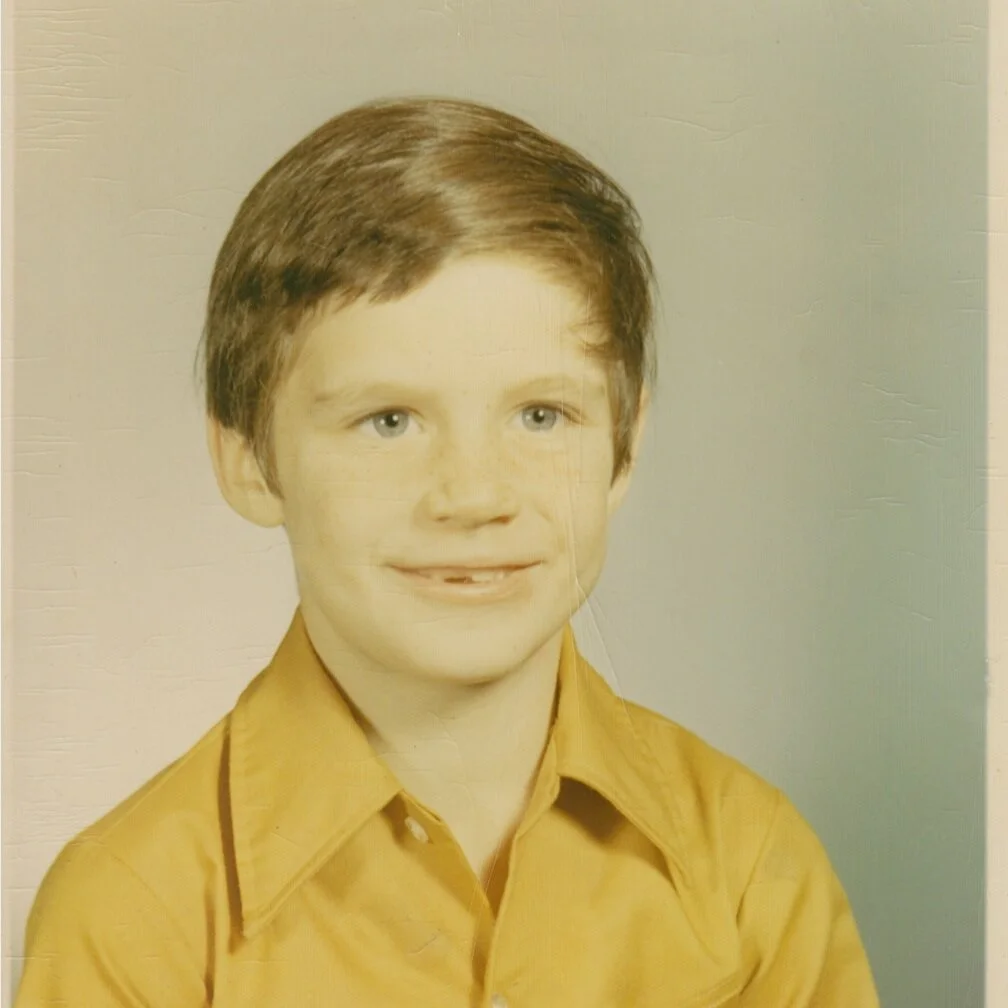
The Most Dangerous Attachment

The most dangerous attachment isn’t to money or status or a relationship.

It isn’t to a house or a car or a dream or a memory or the feeling of love you got the first time you kissed that someone.

It isn’t to a parent or child or a dog you had when you were 12.

No.

The most dangerous attachment is to any idea of who you are in the future or in the past or anywhere in between.

The most dangerous attachment is to yourself — whoever that may be in your blinking, breathing, snoring, dreaming head.

They Aren't Calling

They aren’t calling.

Sponsors.

Sponsees.

Friends.

People from work.

My sister whose husband has a gun in the house.

So I’m on the island of being all by myself, wondering….

Where are they? What are they doing? Why won’t they call me back?

Disorganized

Occasionally, I’ve woken up ready to do but without a real plan for the doing. ‘

I see the emails and slacks and am not sure what to do next.

Projects seem to need me and not need me.

And then the questions that come my way aren’t answerable.

Where are we on this? What about that?

The world seems scattered and I can’t even figure out which piece to pick up first.

The Thing I Said

I’d been feeling crummy and disconnected all day.

Agitated.

But no amount of re-arranging of books or folding of laundry could make it go away.

I was trapped in my own skin, looking for a way out.

She asked about it but I was too ensnared in the bubble of discontent to take her offer. Instead I just said, everything’s fine. Nothing’s wrong. Just cleaning.

Then we went paddling in the bay together. Out past the break, we pushed through chop and wind. Our arms were sore with the stroking. Our faces wet with sea spray.

Afterwards, back in the car, we noted the windburn on our faces. It was good.

But as we drove, my funk came returned and I fell back in the stupor of irritation.

Then she asked: What’s your vision for how we’ll be going forward?

It was a simple joyful question.

But the voice of unhappiness called up from the well of despair: I don’t know. I guess we’ll just buy a house and die here.

And there it was, the sudden knife, swinging blindly out of nowhere from some deep part of myself that wants everyone to see my pain. Pay attention to me. See that I should be different, even if I’m not.

There it was.

And five days later I was apologizing for it, wondering where that being is that did that so I can root it out and kill it.

How Do I Get Rid of Her

She pops up at random times.

But mostly when I’m lonely and I do something and I think, “What would she think?”

I find it pathetic really.

I want to let it go.

I’m 57.

I’m not throwing the world over for a fantasy lark.

We talked about it once or twice. It wasn’t thorough enough. It was just a lot of clinical stuff about transference. Surfaces that didn’t really mean much.

I got the impression she didn’t have experience with it.

I started to hide it, even from myself. I know because every once in a while I could feel myself holding back. (Who says during EMDR — I’m thinking of you giving me a handjob because of the way your fingers moved back forth? Someone, yes, but not me. That’s not okay to say out loud.)

Of course, I couldn’t really hide it. And at least I spoke when I noticed it — the places I couldn’t go because I didn’t want her to think too lowly of me.

The worst was when I used to imagine her walking through the house. I wondered what she’d think of my life. My kids, My furniture. Nothing sexual. Just a person walking through my life. Judging.

I was proud of all that. Which is why the fantasy of her seeing my place was an offering.

Ultimately, I think she didn’t like me.

Ultimately, I don’t think she did like me.

Ultimately, I should’ve left much earlier.

Ultimately, ultimately, ultimately.

But ultimately, it ended the way it ended. And she said, “I thought we were going somewhere else with you.”

I’m sorry I didn’t have the presence of mind to ask: And where is that? The answer would’ve said a lot. (Just its asking said a lot - yet it was unexplored.)

So now I send her Season’s Greetings cards of my life of amazing Instagram-ness to her office and wonder if she ever thinks of me.

Which tells you just how self-centered I really am.
Visionless

Maybe the problem with this life is that there is no vision for it.

Unlike other places, other moments, I don’t know where I’m going with it. I can’t even pretend I do.

In my first San Francisco, I was an artist in hiding. Working between the hours of 5 pm and 9 am on plays and productions and short films. I lived across the street from the dirty wedding cake facade of the Ritz Carlton and was rising from the ashes of alcoholism. Even the trope of learning from the failure and shame of my inability to find a way to stay in a marriage with a woman I loved had its place in the artist’s experience.

In New York, I was a playwright, moonlighting in advertising and not giving a shit. Doing it myself and staying sober with the help of friends, living cheap, and then dating my hot redheaded landlord who took my breath away in public when she wore tall shoes.

In LA, I was a writer on the make married to a woman on the verge. We were coming off good gigs and had the heat of work on us still. Imminent parenthood was enthralling and full of hope even as we were trying to figure out the landing. Unemployed, living on savings, writing scripts between ad jobs, pleased with the space of our two-bedroom apartment at the corner of Crescent and Sunset, driving through West Hollywood in a British Racing Green Mini. That was us. Top down. Unafraid of the sun on our pale skins.

The second tour of duty in San Francisco was a natural extension, but one that cemented us to the road that we’re struggling with now. I was an East Bay dad, living on the side of the water where bohemians could still afford a space to work. First in Oakland where I wrote plays by hand in a spiral notebook. Then in the shade-dappled world of Lafayette where I left behind the theatre and bore down on the career until we were in a house and had a bank account that looked fatter we ever thought it could get. (Ironically, the more we had the more we wished we had — a curious problem where the relief of the scratch causes more itch.)

I’m just in a place I’ve never been before and never imagined being. So odd as we come toward the last bit of working life that I can’t stop.

From the Memory Feed

An observational note to myself 10 years ago found in the Facebook memories feed:

The greatest thing about H and the boys being at grandma's house is experiencing the vacuum of life I now live in without them. My workaholic comes out with fangs and terrorizes the emptiness with activity.

And the person who is me sees my insanity and cannot wait for the family to return and cage the shallow animal that relentlessly fills the void with scripts and scrawl in a crazy effort to fool the mind into thinking: I have purpose anyway.

Whiplash

We spent two months talking through leaving where we were to get here.

I’ve spent a year and a half working through here and am realizing I want to go back there.

Will it change anything?

I don’t know. But I’m tired of this.

Follow Up

An idea for a TV talk-show: reunite therapists with patients 5 years after “termination” — or after their “relationship” has “ended”.

Did it make a difference? Does the therapist even remember the client? Does the client feel they got the tools they needed to get real growth?

Alternate name: 5 Years After.

Obviously, there’s an issue.

She Won't Let Me Take Pictures of Her

I turn the camera toward her and she puts a hand up.

“Please don’t.”

It is more than just a demure objection.

Once upon a time, in a land faraway, she blinked at me patiently as I adjusted Super-8s and pushed the buttons on Nikons and wondered if the Diana in my hand had been centered enough to keep her blue eyed gaze in focus (you never knew with those things until you got the 120 film back from the lab). Whenever we saw a photo booth she would pull me in for a smooch and a snap.

Gone are those days, along with the pencil skirts and tall shoes. It’s become the rare night when she takes the eyeliner out just for me and rubs the gloss on the lips I loved to linger on so much under street lamps in New York.

Instead it is the palm forward and the splayed fingers. It is the turn of the head away. It is the silent mouthing of “Not now” that I can read through the smallest of apertures.

So now I do my best to capture her beauty through odd angles and zooms that make the background of the life we are in an indeterminate blob of could-be-anywhere-any-era.

I want to say, let me show you how I see you. Let me capture what I love. Your answer is always a head shake and an eye-roll. Or, if there’s company, a thin lipped aside: “You’re doing it again.”

I miss you, woman whose shoes click-clacked across the New York pavement to me. I am even angry about it.

Of course, when I look in the books that sit on the piano, I see that I am not who I once was either. There are pages of proof. Ghosts stare back at me. Teeth a little whiter. Hair less gray. No paunch to speak of. The eyes get me the most. No bags or dark lines. I seem untouched by the anxiety of a life full of questions.

Ugh. I hate this time of recognition.

I put my hand up and splay my fingers at myself: Please don’t.

How to Snorkel

The wetsuit felt tight to begin with but when I jumped into the cold water at Pelican Bay my chest felt imprisoned by it. Suddenly breathing became an unnatural act that had to be thought about to be done. In. Out. In. Out. My lungs were impatient for the air they were so used to getting easily and without noticeable work.

What is going on here? Why is this so much work? Why am I running out of air? WHY CAN’T I BREATHE?

I kicked my flippered feet back and forth to keep my head above the swells and turned. The boat looked like an island drifting away from me at an alarming rate. Wait, I thought weakly, don’t go that way. But the wind didn’t care: it pushed the fiberglass buoy of hope even further out along the circumference of the circle allowed by the anchorage.

I glanced toward the shallows where the back of my son’s head bobbed in the surf above the kelp. The blue tip of his snorkel cut smoothly through the water’s surface, unconcerned and easy. He moved like a lazy leaf between the world below and the world above, taking in the feast the sea offered.

They seemed like friends, one powerful and deep; the other fragile and trusting — an easy-to-break robin’s egg in the palm of a giant’s hand that reached across the surface of the earth.

Could I do this?

I relaxed and pulled my mask on. Slowly, evenly, I lay down face first in the surf and let the urge to kick pass through and just… breathe.

One. Two. In. Out.

Instead of someone who had to get somewhere — safety, a boat, a view of a starfish — I was just a being drifting in the space known as the ocean and a whole new world appeared below me.

What a perfect lesson for me and my life.

The ocean beneath came alive with flashing orange Garibaldi and purple urchin.

The Story of Buildings is the Story of Us

When I was a kid, one of my favorite books in the house was the “100 Greatest Buildings in Architectural History.” It was a thick, big picture book with dimensions that were slightly bigger than a Rolling Stone magazine (an oversized tabloid at the time).

I loved crouching on the floor in the den to page through its illustrations. Gatefolds opened up to show artist’s versions of the Great Pyramids, the Parthenon, the Taj Mahal, Notre Dame, the Crystal Palace, the Chrysler Building and on and on up to what was then called the Sears Tower (today Willit’s Tower). Cutaways and callouts showed the structural and cultural details that made each building a singular monument of the civilizations that had built them.

I was recently reminded of the awe and wonder I had when I returned to the latest version of that book, “The Story of Buildings” that I bought for one of my kids. Slightly smaller in size (more like an oversized picture book from Blurb) it no longer promised the breadth of history in the title but instead offered a deeper and bigger theme about what buildings really are: the story of culture writ large.

It starts with a two page chapter on what it must have been like to build a hut in the unforgiving elements of nature. Today we take for granted the problem solving and tools that a pre-historic person had to command to create a lean-to that didn’t fall over in the wind or leak in the rain. Such a humble reminder is a perfect way to launch into the stories of the great buildings throughout time that people have worked together to construct.

In the process we learn how every building is not just an example of any given era’s design and technology, but a statement of social values and philosophy — a 3-D reflection of the society that made them.

We wonder at the cruelty of the social organization it required to build the Pyramid of Djoser. We learn how stone arches and domes allowed the Romans to build enormous and muscular structures that both awed and cowed throngs at coliseums and temples. We see how the Forbidden City was designed as a show of enclosed power that eventually became too isolating to have any force over the world beyond its walls. We witness the great jump that the industrial revolution represented for construction with the modular build of the Crystal Palace in 1851. We gape at the tall world Louis Sullivan made with skyscrapers that he considered to be alive and democratic. We see the faith in the power of dreams to shape reality in the way Utzon’s sketch pushed engineering, technology, and builders to create the Sydney Opera House. We get a sense of the environmental and sustainable direction we are headed toward with an examination of the Straw Bale House built by Wigglesworth and Till in London some 20 years ago.

While the book touches on structures like the Hindu temple at Angkor Wat; the pyramids at Palenque, Mexico; the Taj Mahal; the Mosque of Ibn in Cairo — and so forth — the book is definitely Euro-centric in its focus. That means there’s clearly a good opportunity for another book. Still, it’s possible to see in its reflections on Western Civilization’s buildings that there is a take-away that is likely universal for any building, in any era, no matter how big or small. Quite simply: The story of a building is more than the story of time and materials and function, it is the story of us.

Coming out of the pandemic, that is a good thing to remember as we grapple with ideas of how home and work will co-exist in the same places and we sort out who we are, now..

The Story of Buildings by Patrick Dillon, illustrated by Stephen Biesty.

Yesterday

My kids pointed out yesterday that 47 years ago I turned 10.

I pointed out that 40 years ago, I turned 17 while working on a yearling farm in Pennsylvania.

But who’s counting?

There is not doubt I am a
lucky — fortunate — man.

I beat myself up too much about my failings, perceived in particular. Has that helped me get further? Maybe. Is it helping me now? I don’t know.

I have a lot of doubt about what I’m doing. And whether I can do it. The doubt helps me reflect on what’s happening and gives me a little humility, but is it the right kind of humility?

Last night was all about the 6th step. Being entirely ready to have all the defects removed.

Being ready. What does that mean, exactly? It is easy to say, but hard to enact. In fact, there’s nothing to enact. It’s a state of readiness. This morning that seems nothing more than an awareness of something. An understanding of what these things — defects — are.

Allowing the possibility that they can “be removed” like scales from the eye or chains wrapped around the spirit. (I’d prefer the term “lifted” for its sense of another source of power, but that is not exactly right either.)

Hats Off

Tonight, I’ll watch G graduate from Junior High.

13 years ago, we were poor (in a hand-to-mouth way) and living in West Hollywood at the corner of Crescent and Sunset between a McDonald’s and a Zen Buddhist Center.

I was making money freelancing in Boulder, Colorado, and at a place out in Venice Beach. We ate well and friends who had more came over to enjoy barbecue and homemade mac and cheese.

We lived on expectations and friendliness.

We were happy.

Today, we live in a Montecito bungalow and walk to the beach in our flip flops. Our Sonos plays “More than a Feeling” whenever I want. At dinner G and L debate whether or not George Lucas is a good director. They point out that the First Order helmets aren’t as good as the original Storm Trooper ones. The dog begs anyone who will pay attention to throw the frisbee.

And tonight I’ll sit in front a computer and watch my kid say go through a new door that likely means more to me than him.

We let go of a lot in the last year. We have more to let go of. And more to become.

And we are still happy.

I Read to the Boys

Pax.

The Princess, the Scoundrel and the Farm Boy.

Haroun and the Sea of Stories.

Bone.

Call of the Wild.

Killer Angels.

The Road.

The Little Prince.

I am not sure what I enjoy more. Reading or hearing them read back to me.

I am not sure who likes it more. Me or them.

Better Off

Asleep, the mind is off.

Sure, the dreams try to tell me otherwise, but in the dark state, I can only watch. And marvel.

But when I get up, you go to the rooms where the signs say think, think, think.

And mostly, I overthink, especially about the feelings that have no name until I think about it.

Is that a feeling? Or was it the thought that gave that feeling a shape, that, once applied can not be undone.

When is a feeling or thought something I should do something about?

I tell ya. Sometimes I believe I would’ve been better off if I stayed asleep.

Pointless

I have to confess. Things have been feeling pointless lately.

My kids who are generally wonderful are also impossible often enough that I’ve begun to recognize a feeling of relief when they’re not around.

My wife, who I share this adventure with, seems angry all the time. Worse, when I do nice things, they trigger disappointment and self hate.

Like our anniversary this year. 16 years. I remade her wedding band (which she lost in the move). I pulled her aside from the bedlam of our life (her mother is here and our kids were yelling at each other) to give it to her. She thought I was ashamed of her and unwilling to state publicly what I said privately. Then she went into a funk when the ring didn’t fit her correctly, feeling fat and ugly and out of shape. The very sign of my commitment to her became a symbol of self-rejection and humiliation.

She gave me a tennis ball with a message about love written on it. She offered a short apology that the things she’d bought for me hadn’t arrived yet. After dinner, she sat apart from me and the youngest as we watched a movie. I asked if everything was okay. She said she was “thinking.” I took it she was thinking about the parents of a friend of our youngest’s who’d been asking us to make our youngest be his friend. They hadn’t been nice.

Her gift to me came the next day — a beer glass with the name of the first place we’d had pie together etched on it: The Utopia Diner in NY.

”I’m sorry the rest isn’t here yet.” I hoped “the rest” wasn’t a set of shot glasses.

Later the frustration broke out into anger. I hadn’t made the day special enough. I hadn’t done the things she felt I should’ve. She didn’t feel seen or recognized or understood. She told me how my pulling her aside made her feel like I was hiding from the day.

I asked why she hadn’t stopped and tried to send it all in a different direction herself.

Whether I was in the right or not, I was boiling with anger. Deep down, I thought, I hate my job, I hate this conversation. When I’m not at home I feel better. What the fuck am I doing? What’s the point?

A money machine is all I felt I’d become at that moment. Working a job that is robbing me of time and not panning out, a job I had to convince myself to love with people who don’t really get it.

I figure I’ve got maybe 15 years of good physical movement left. But instead of white water rafting trips, I’m being told we are not happy without a house we “own” and that in the meantime, we need to buy expensive backyard furniture.

I don’t even want to make love. Instead I make appointments to see doctors to get the non-narcotic sleep aids that don’t work well and definitely don’t keep my brain from racing through thoughts of sleeping with people who I don’t know.

I’m even thinking of having a beer on the weekend and just drinking it all away, because, well, why not?

It is all self-centered, self-pitying thinking. I know this but can’t get rid of it. Therapists, AA, sponsors, meditation, job changes, deep conversations — years of all it and I am still here, just not yelling as hard in the wind.

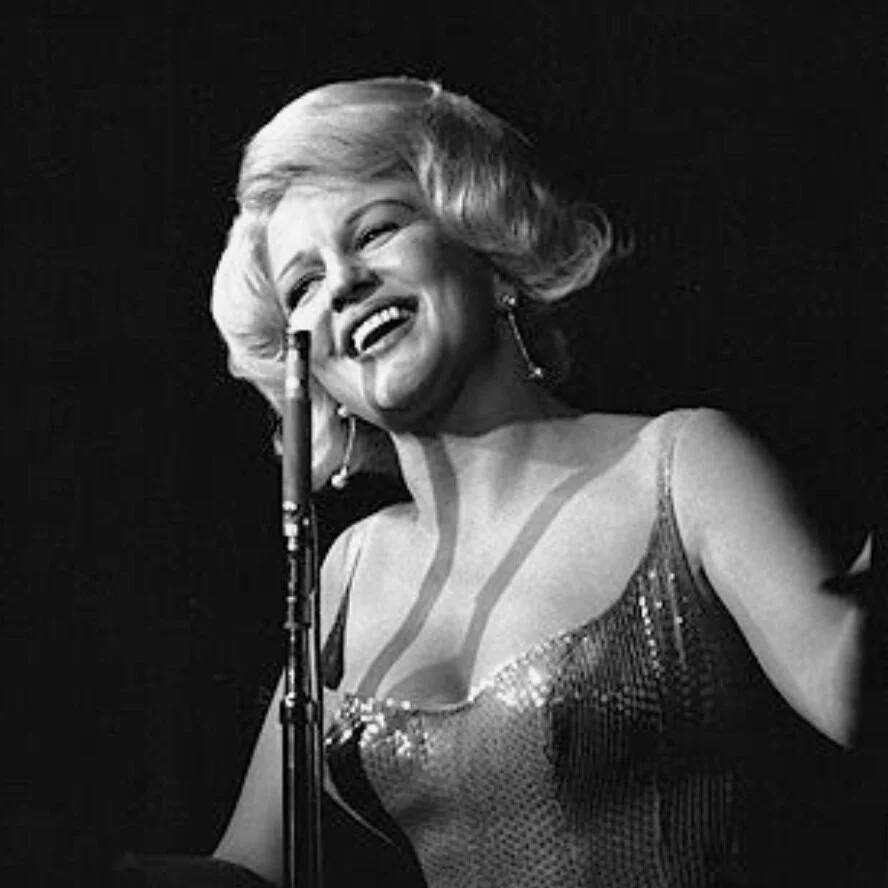
And I’m asking like Peggy Lee: Is that all there is?

Tomorrow's Book

Some day, I’m going to write a book called, “What Happened to Them.”

It’ll be the stories of the people I’ve known.

Like Howard Katzenstein who became a pediatric oncologist.

And David Shelist who sells expensive blue jeans in downtown Chicago.

And Ascha Drake who I kissed on a hot night in front a Chagall in the South Loop and who worked in Bedstuy as an art teacher before moving to Oakland.

And Brian Schlager who broke his back doing motocross and healed up fine.

And Carrie Connelly who danced in the Chicago ballet and didn’t marry Joe Brent.

And Lisa Young who smoked cigarettes when she baby sat us and taught all the kids to blow smoke rings.

And Mary Mangold who made me crazy hard and said sex hurt too much to have and later lost her son in Afghanistan.

And Robert, the first to lead me out of the bottom of the well made by my own self-centeredness.

And Kerry Lehman who wore socks like Elaine on Seinfeld did and could art direct like crazy.

And Jane from Putney who was posh and blonde and wanted me to do so much more.

And Graham who loved Dylan and told me if we were gay we’d be lovers.

And so many more. Everyone. Including Kenny Carbocci and Kari K. and Beth and woman name Rachael that my grandmother suspected was Jewish.

And Ira and Andy and Georges and Edna and Jose and Glenn and Amy (S) and Glen (of the bookstore) and Liz and Andy (from JWT) and Mahboob and the Brents and John Southworth and Maureen McCarthy and the Wilkie’s and the Sheppard’s across the street and Paul Pfieffer and Cameron Galloway and so many more still to be remembered people.

And maybe even my therapists…. Emily and Howard and Scilla and Peter and Lynn and who knows.

Yep. All of them.

It’ll have pictures and everything and hold their voices in wood.

Because it will be interesting to see the their stories and the larger story they tell when I’m not always putting myself at the center of everything.

Dear You

Dear You,

I see you there in the closet, hiding. Waiting. Anticipating. Feeling excited and special and secretive. And the not-okay pit at the base of your brain and buried in your 7-year-old gut.

You know.

I know you know because you can hear the others down the hallway, laughing, playing, rough-housing, not knowing.

You’re thinking Star Trek. You’re a captain of a space cruiser going where no one else has been, fearless and fearful for everyone else. You see yourself alone on the bridge except for a short skirted woman who talks to you with all the power. You can’t stop looking at the place where the hem lays against the back of the thigh. You’re not supposed to, but she tells you it’s okay and so you do and the excitement you have grows like a slow moving cloud of shame that only goes away when it explodes on itself, in your hands.

You know it’s wrong and all this time later this is a part of you/me that wants to punish you for that, a part that is unforgiving about the shape that this moment will give everything to come after.

I’ve dreamt of beating you in the face with my brutal and judging fist, knowing full well I am only smashing myself, knowing full well that I am achieving nothing but reinforcing that you are flawed and damaged from an event that was not of your making.

Oh, you. I am so sorry. You are trapped in the amber of my memory and I do not know how to get you out.

The odor of her body (pencil shavings) live in the amber stone and you still feel the synthetic excitement that her pantyhose gave off as they rubbed against your white underwear. “Someone’s got to show you,” she says as she guides your hand to her bra snap and the full of her breasts are suddenly there.

You don’t know what to do so you rest your head against her chest and feel the heart beating within.

Her hands urge your mouth down: Kiss me.

Dust motes twinkle in the air suggesting there is a mysterious structure to the world that is too big to understand. (Still, these glimpses will stay with you forever, reminders of what can’t be spoken about.)

Oh, you. I don’t know why it has been easier to forgive the one who did thing to you than it has been to forgive you for just being a boy. A good boy who read Pyle’s tales of King Arthur and who gazed quizzically on the art nouveau illustrations of Lancelot swooning in the wild over his passion for Guinevere.

Come with me out of the closet. You are a good kid. Let me protect you. Let me help you. I don’t even know how, but is this good enough? Can this be a start?